Sprout
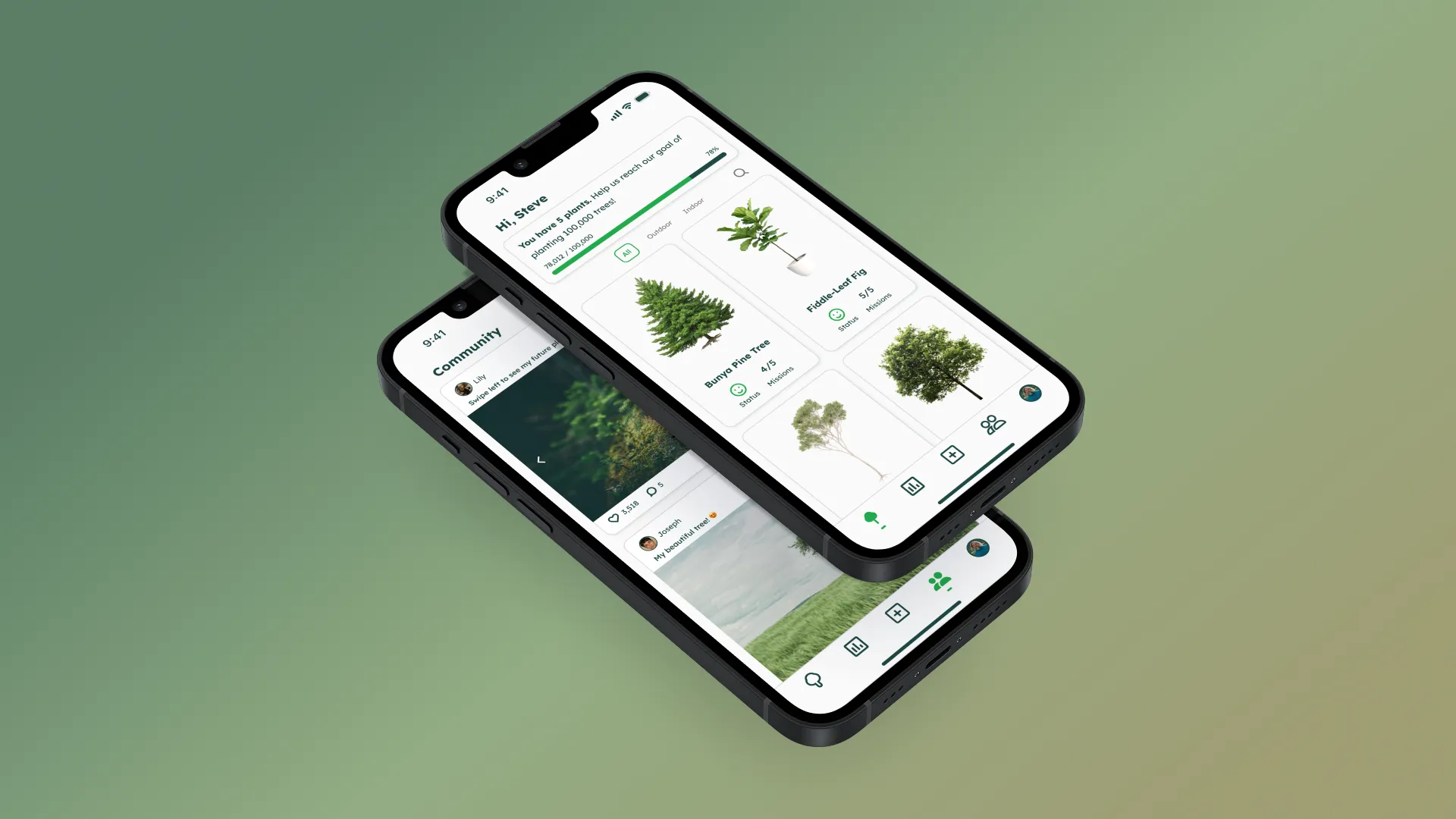
I led a team of four to design a mobile AR app that helps encourage people to plant trees. We wanted people to make simple steps in helping the environment. We ran user research to learn what motivates sustainable behaviour, then built and tested prototypes to see how people used the app. Through many rounds of user testing, we refined the app to make it easy and clear to use.
Project Overview
About this project
Duration
- 12 weeks
My Responsibilities
- User Research
- Usability Testing
- UI Design
- Prototyping
- Figma
- Iterations
- Editing Promotional Video
Achievements
- One of five projects shortlisted to present at the ADP Open Jury Industry Crit
- Project featured in the ADP Graduate Catalogue 2024
- Project featured on display at the ADP Graduate Show 2024
Design Brief
We aimed to develop a solution that addresses one of the 17 Sustainable Development Goals identified by the United Nations. We addressed Goal 15: Life on Land, with a particular focus on target 15.2, which emphasises promoting sustainable forest management and halting deforestation.
Project Showcase
What is Sprout?
With Sprout, users can plant real saplings and then use AR to visualise how the trees will grow over time. By offering an immediate glimpse into the future benefits of their actions, Sprout inspires individuals to become more active in tree planting.
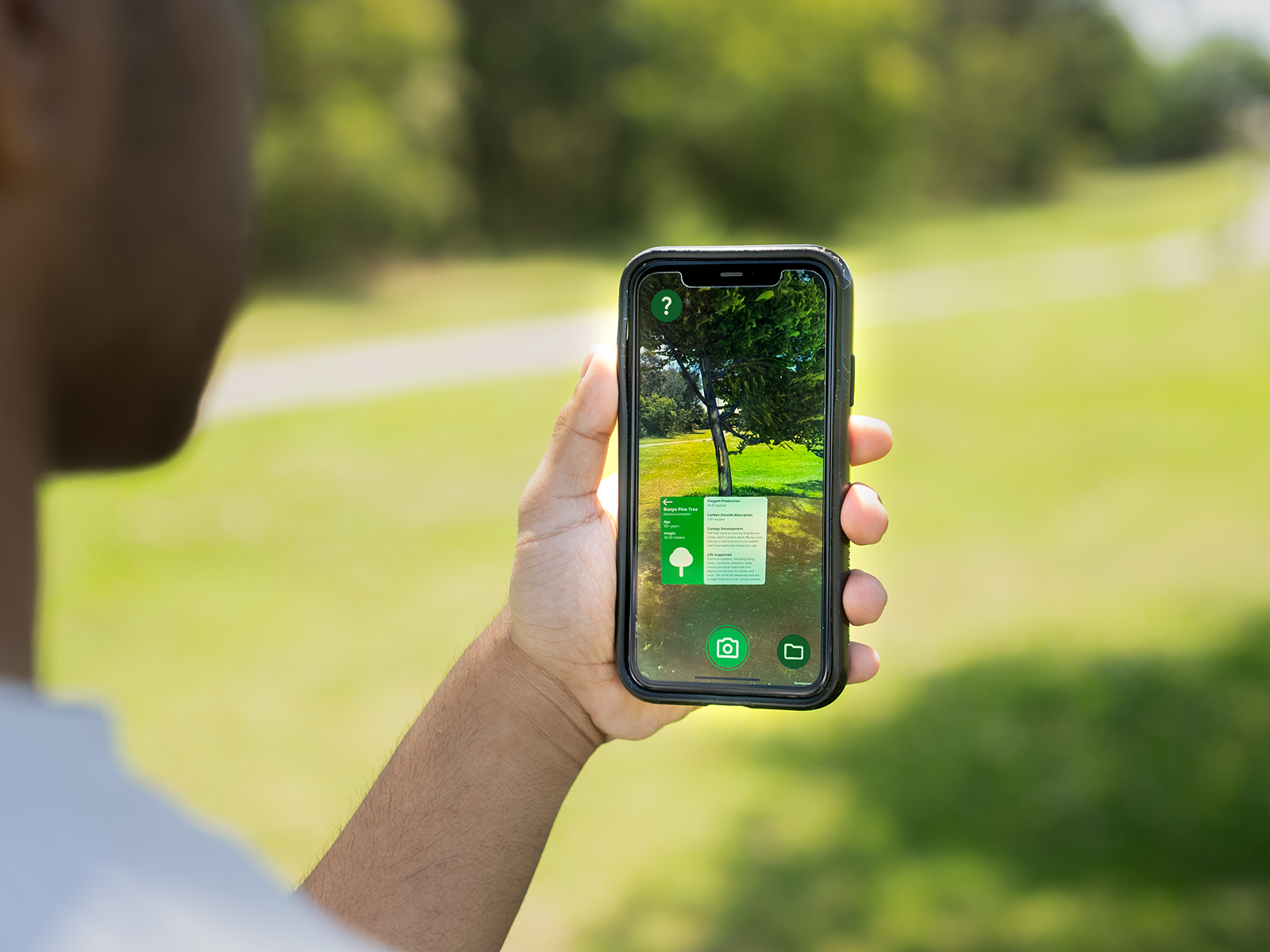
Visualise and Learn
Experience your future free in AR and immediately discover its pofential environmental impact
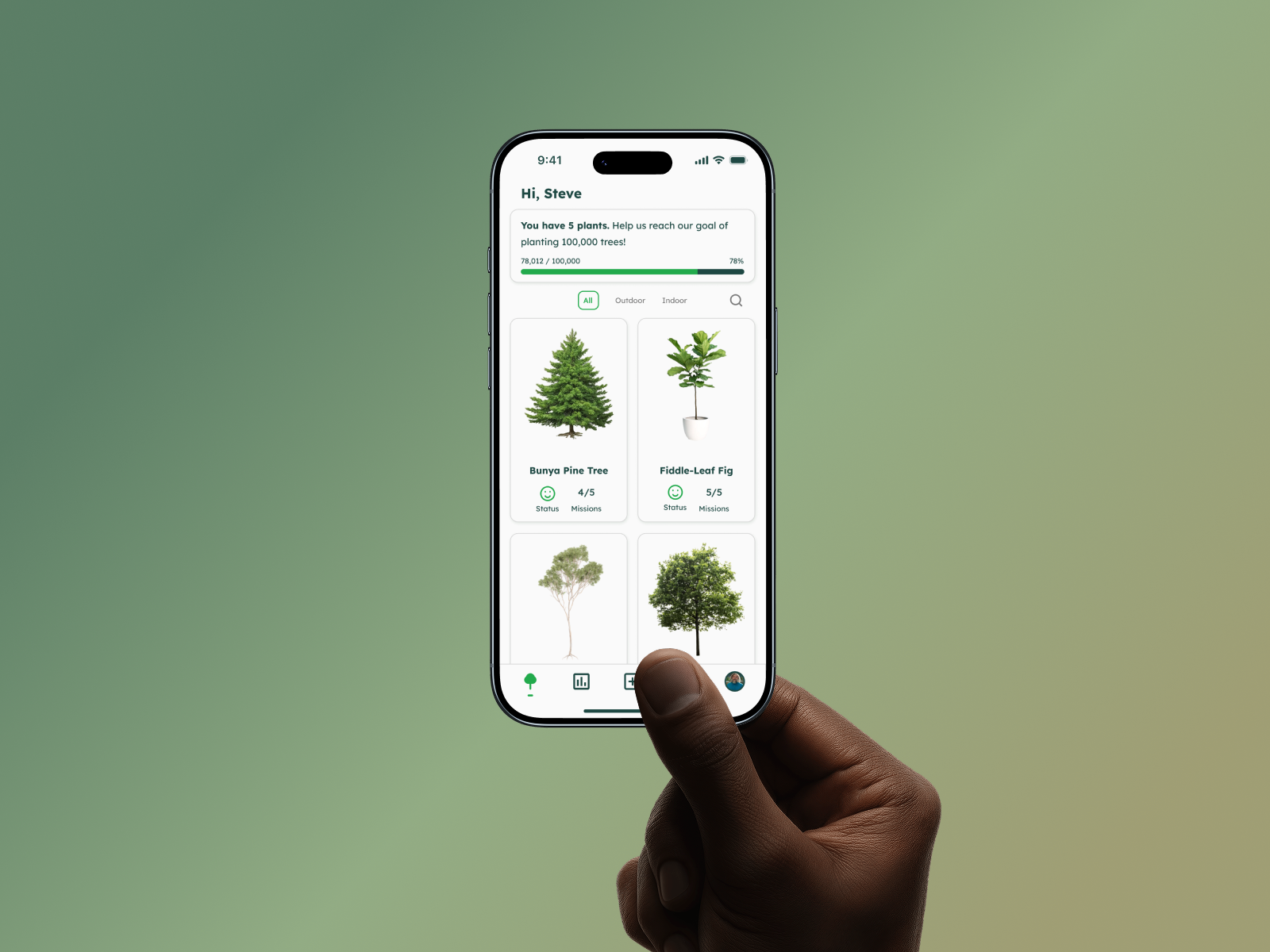
Track each plant
Save plants to the collection fo track their health and environmental impact.
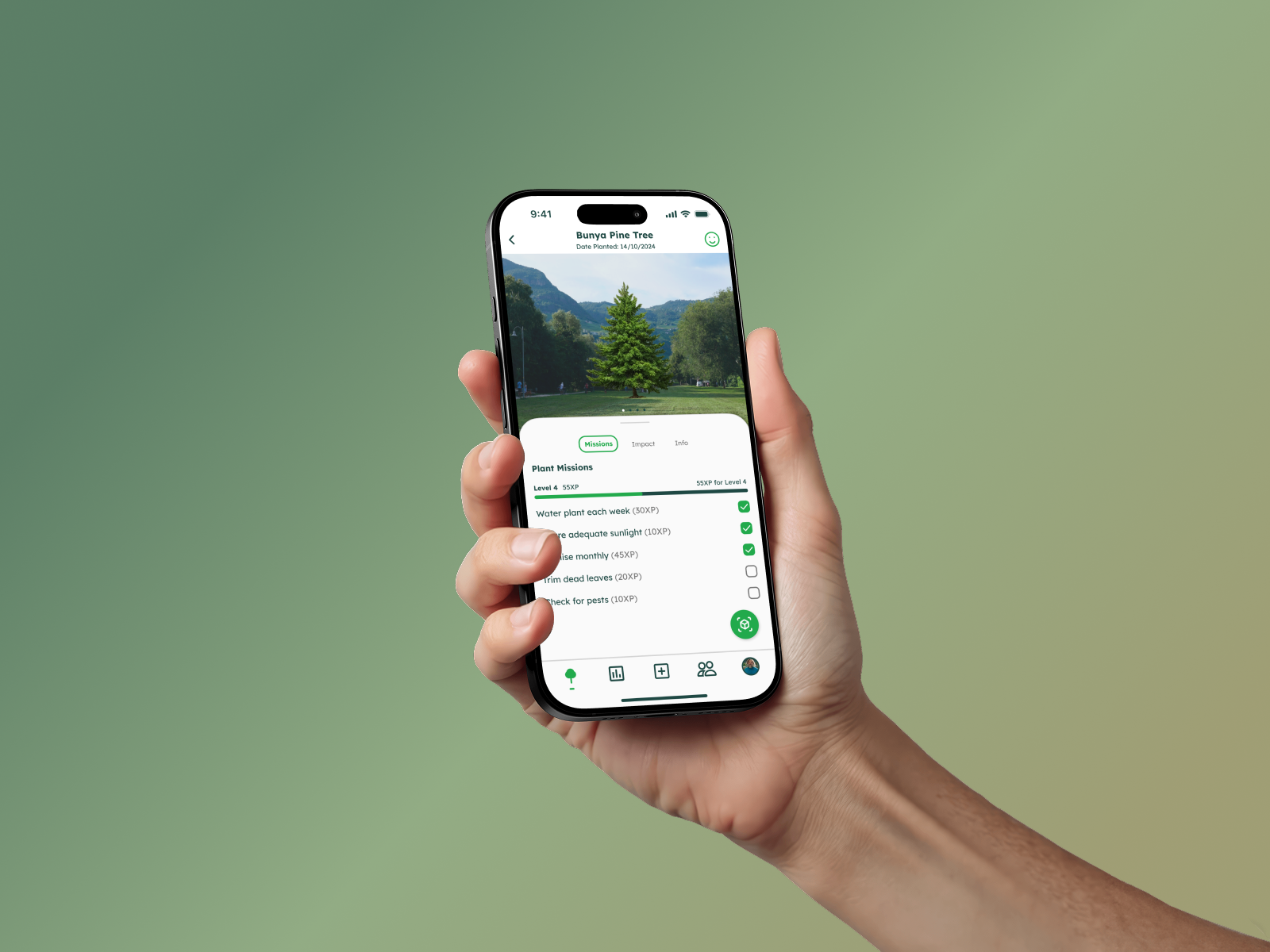
Gamified free care
Tree care becomes fun and easy with missions failored fo your plant's needs.
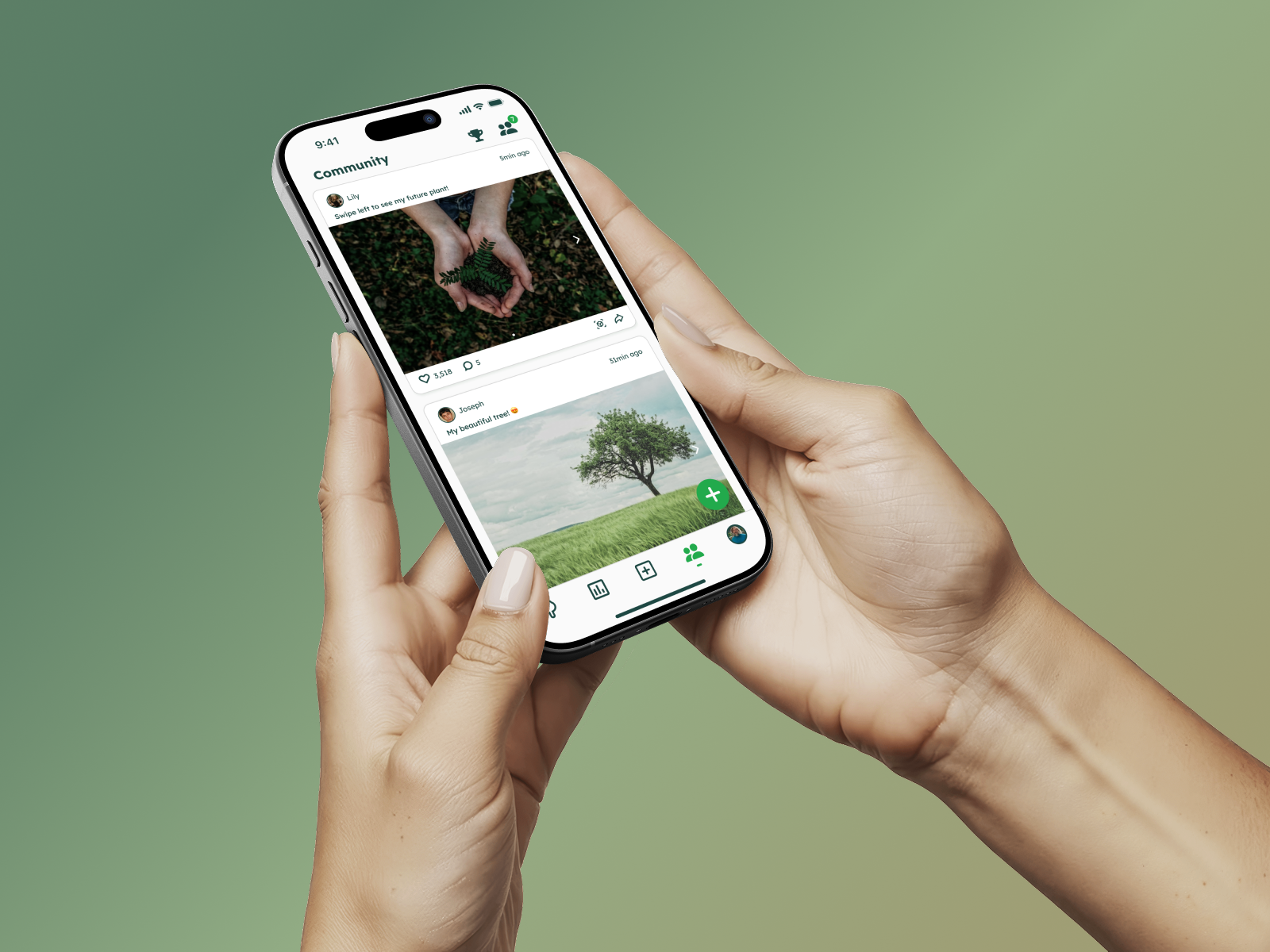
Spread the word
Share with friends fo spread awareness and encourage others fo participate.
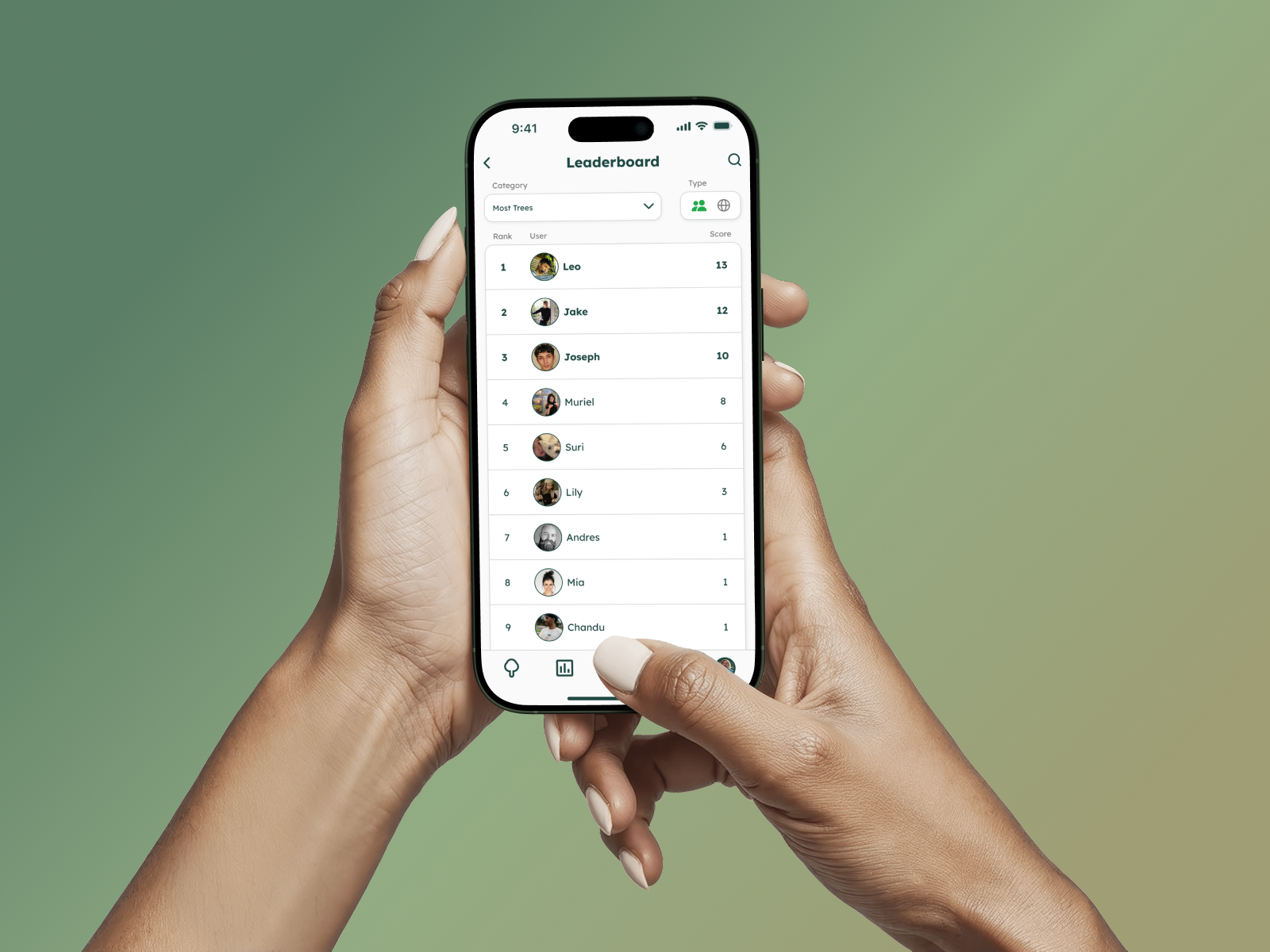
Leaderboard
Compare yourself against friends, to spark a fun, friendly compefition.
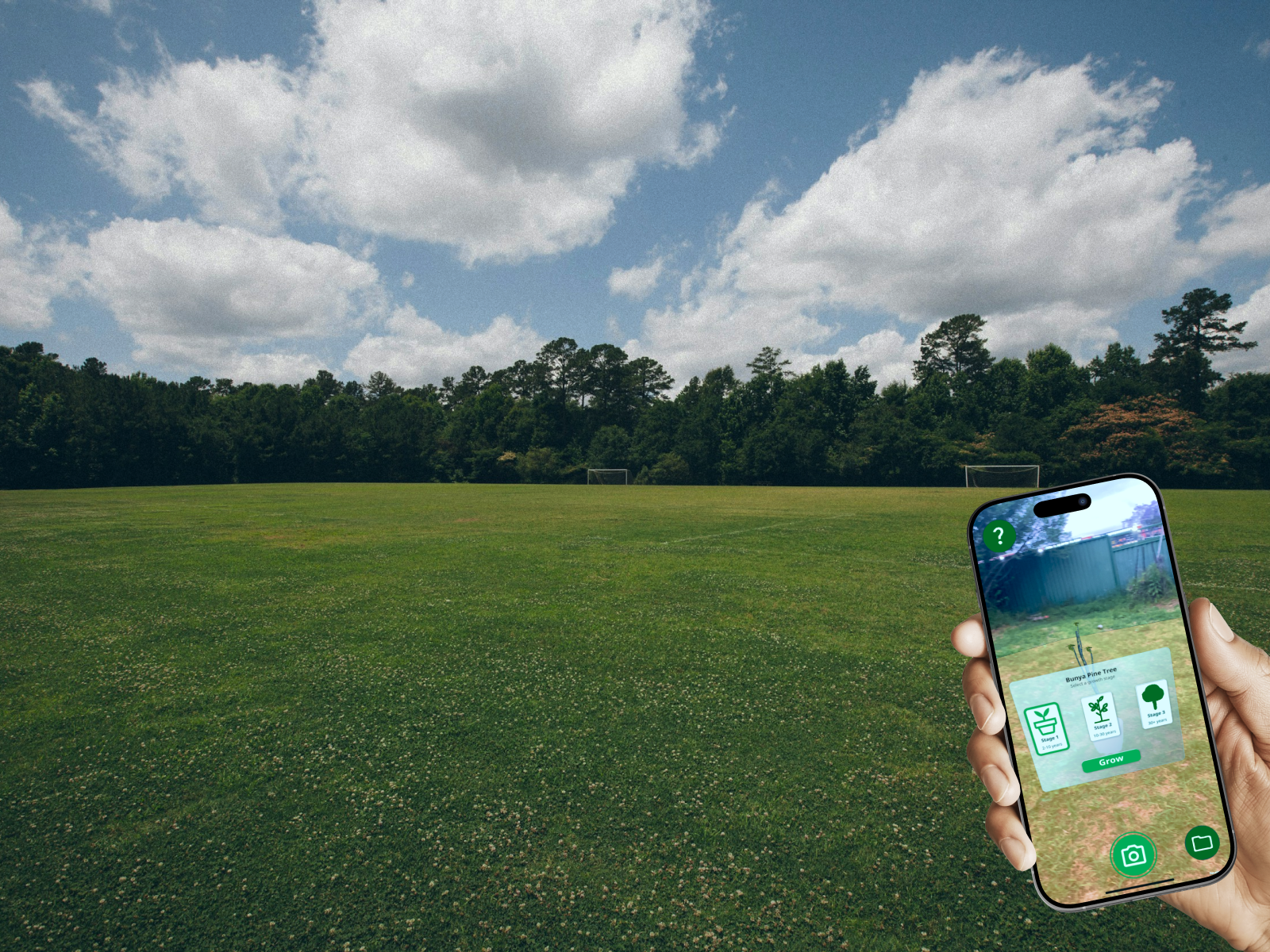
See the whole growth cycle
Observe various stages of growth in real-fime, and easily switch between sapling and full-grown tree.
Problem Area
Deforestation is ruining our planet
Deforestation results in the destruction of natural habitats, which leads to the extinction of many plant and animal species causing a decline in biodiversity worldwide. Since 2000, 488 million hectares of tree cover have been lost, leading to serious environmental damage.
Our Goal
We want people to care, because right now they don’t
Our Goal
Our goal was to help individuals see the importance of trees. When people learn why trees are important, they start to care more about them. This change in thinking makes them want to plant and look after trees. As more people do this, it becomes the norm, and future generations will grow up with the same mindset.
Ultimately, the idea is to take an initial step in fixing a larger global problem.
Target Audience
Young people are the future of our planet. They are the ones capable of creating a more sustainable tomorrow. By focusing on this demographic, we aimed to understand their needs and inspire meaningful action for lasting change.
Competitor Analysis
Existing solutions won’t solve the problem
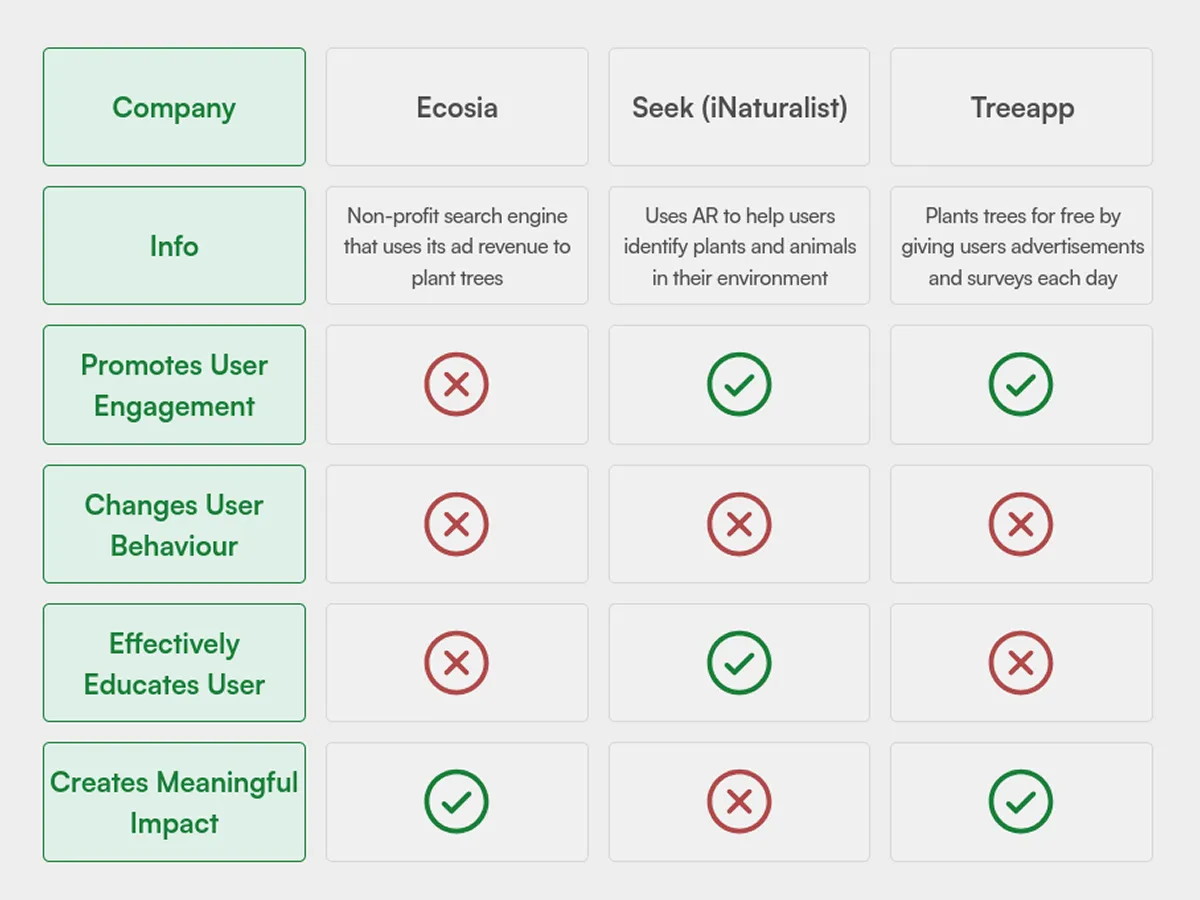
Most apps today raise money for reforestation projects through crowdfunding, but they don’t really change how people think or act regarding deforestation.
Example
Platforms like Ecosia and Treeapp fund tree planting by showing ads or offering surveys. This helps raise money, but it doesn’t inspire people to take action themselves, like planting or caring for trees. Instead, these apps just turn normal online activities, like browsing the web, into a way to support the environment.
User Research
Understanding what drives environmental action
Methods
- Interviews
- Focus Groups
- Questionnaires
- Affinity Diagramming
- Online Ethnography
- User Personas
Key Interview Questions
- Have you ever tried or thought about reducing your environmental impact?
- What stops you from getting involved in environmental activities?
- What would encourage you to take part in conservation efforts?
- If you could see the impact of your actions, how might this influence your decision to participate in conservation activities?
- What do you think would be the most personally rewarding way to help the environment?
User Research Insights
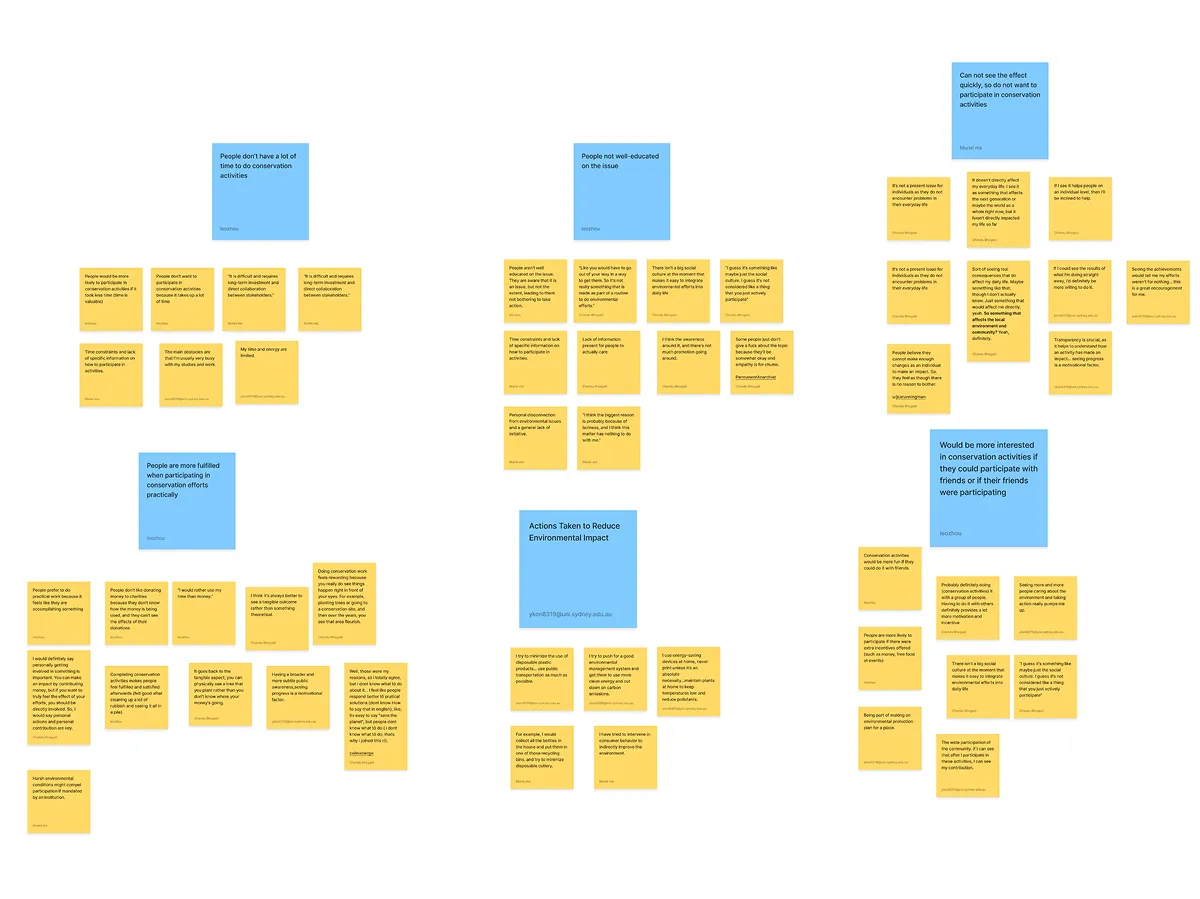
What’s stopping people from doing anything?
Most people would face personal barriers that discouraged them from participating in forest conservation activities, even if they had an interest in helping environmental issues.
Not seeing the impact of their actions
- “If I could see the results of what I’m doing straight away, I’d definitely be more willing to do it.”
- “It doesn’t directly affect my everyday life. I see it as something that affects the next generation.”
Limited Time and Knowledge
- “The main obstacles are that I’m usually very busy with my studies and work.”
- “People aren’t well educated on the issue. They are aware that it is an issue, but not the extent, leading to them not bothering to take action.”
- “Like you would have to go out of your way (to do it).”
- “(Theres a) lack of awareness around it, and there’s not much promotion going around.”
Most people had some interest in helping the environment. Many said they would be more willing to participate in forest conservation if they had the right motivation.
Preferring Direct Involvement
- “It goes back to the tangible aspect, you can physically see a tree that you plant rather than you don’t know where your moneys going.”
- “I would rather use my time than money!”
- “I think it’s always better to see a tangible outcome rather than something theoretical.”
- “I don’t like donating money to charities because I don’t know how the money is being used, and I can’t see the effects of the donations.”
Wanting Social Participation
- “I guess it’s something like maybe just the social culture. I guess it’s not considered like a thing that you just actively participate.”
- “Seeing more and more people caring about the environment and taking action really pumps me up.”
- “Tree planting would be fun if I could do it with friends.”
- “Definitely doing it with a group of people. Having to do it with others definitely provides a lot more motivation and incentive.”
Prototyping
Developing our solution
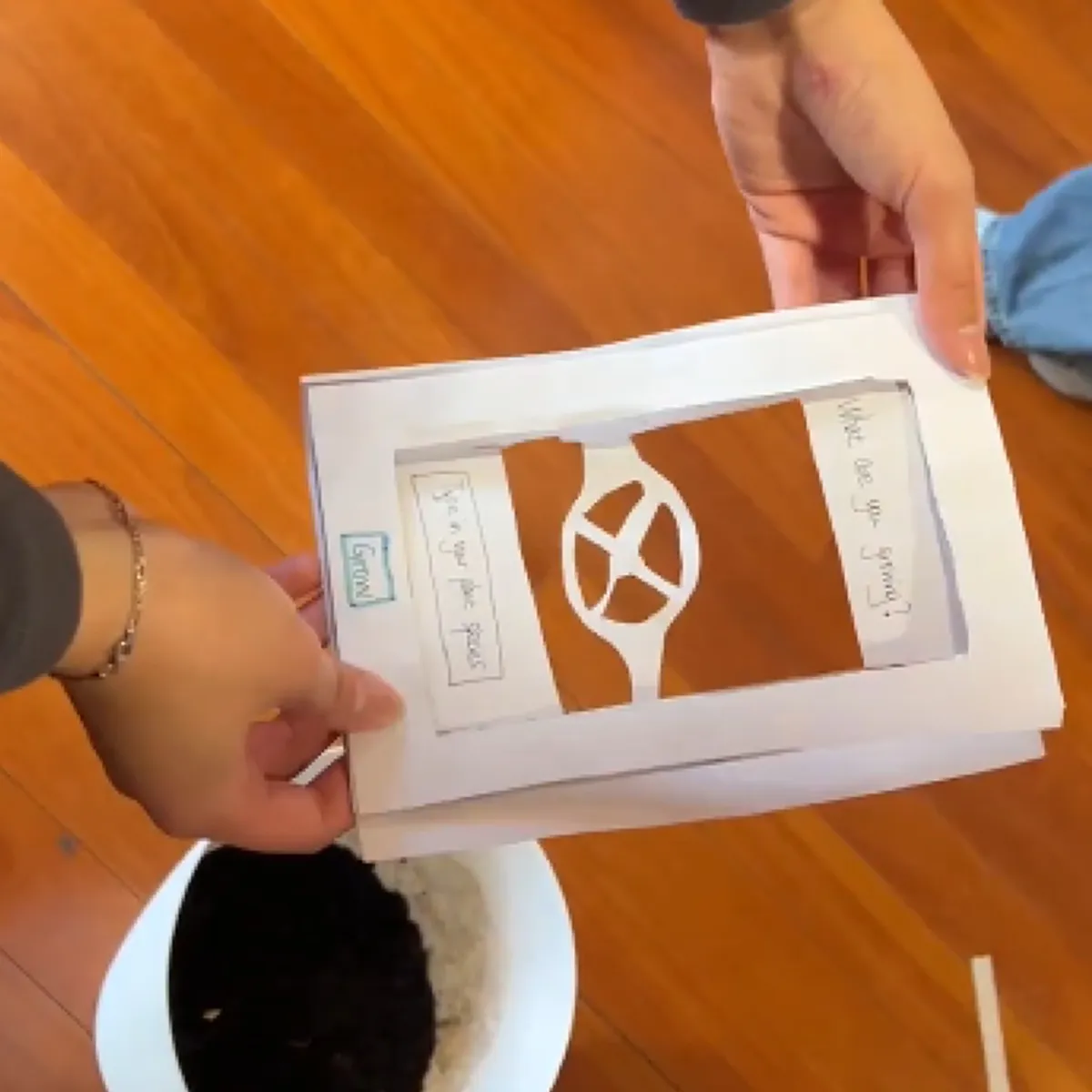
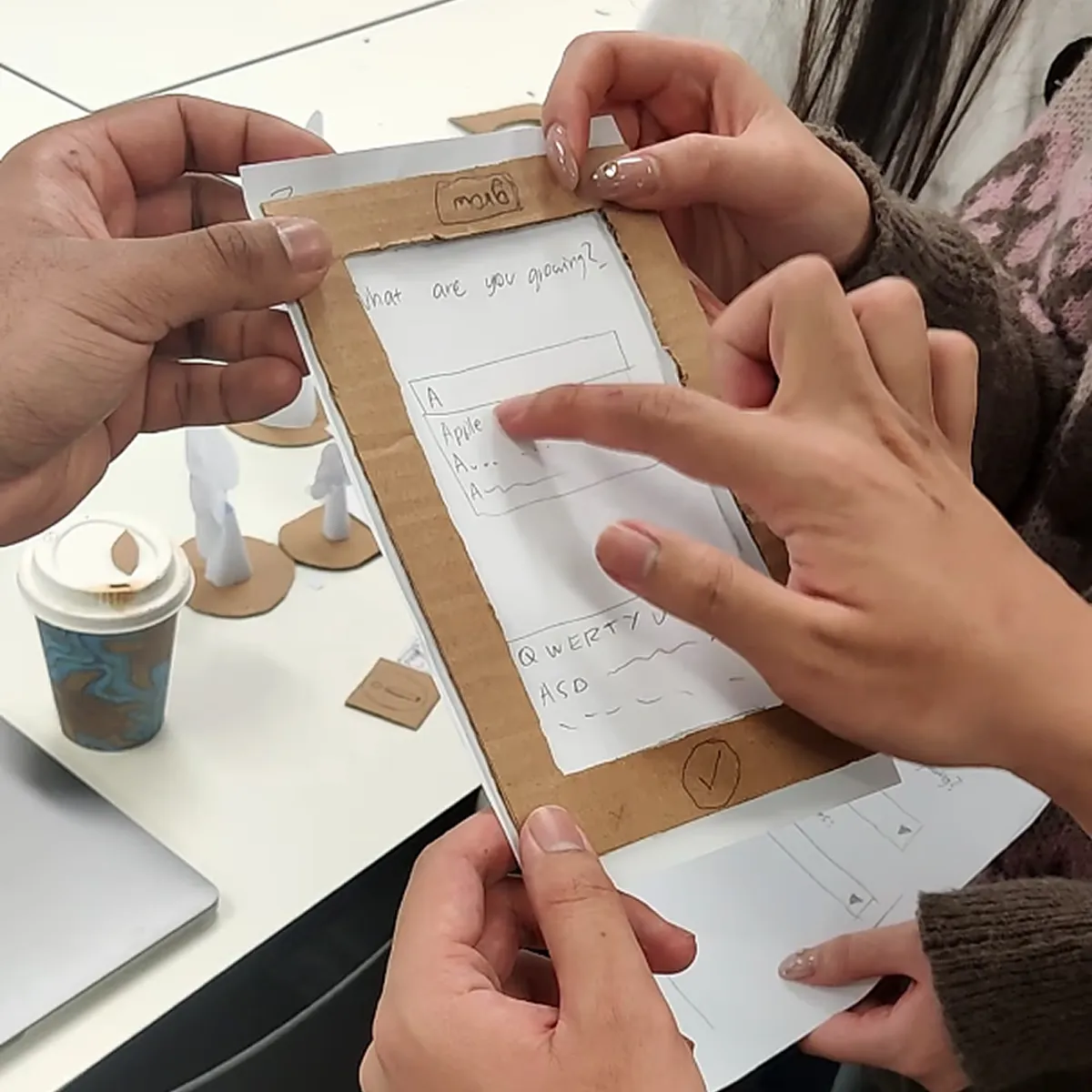
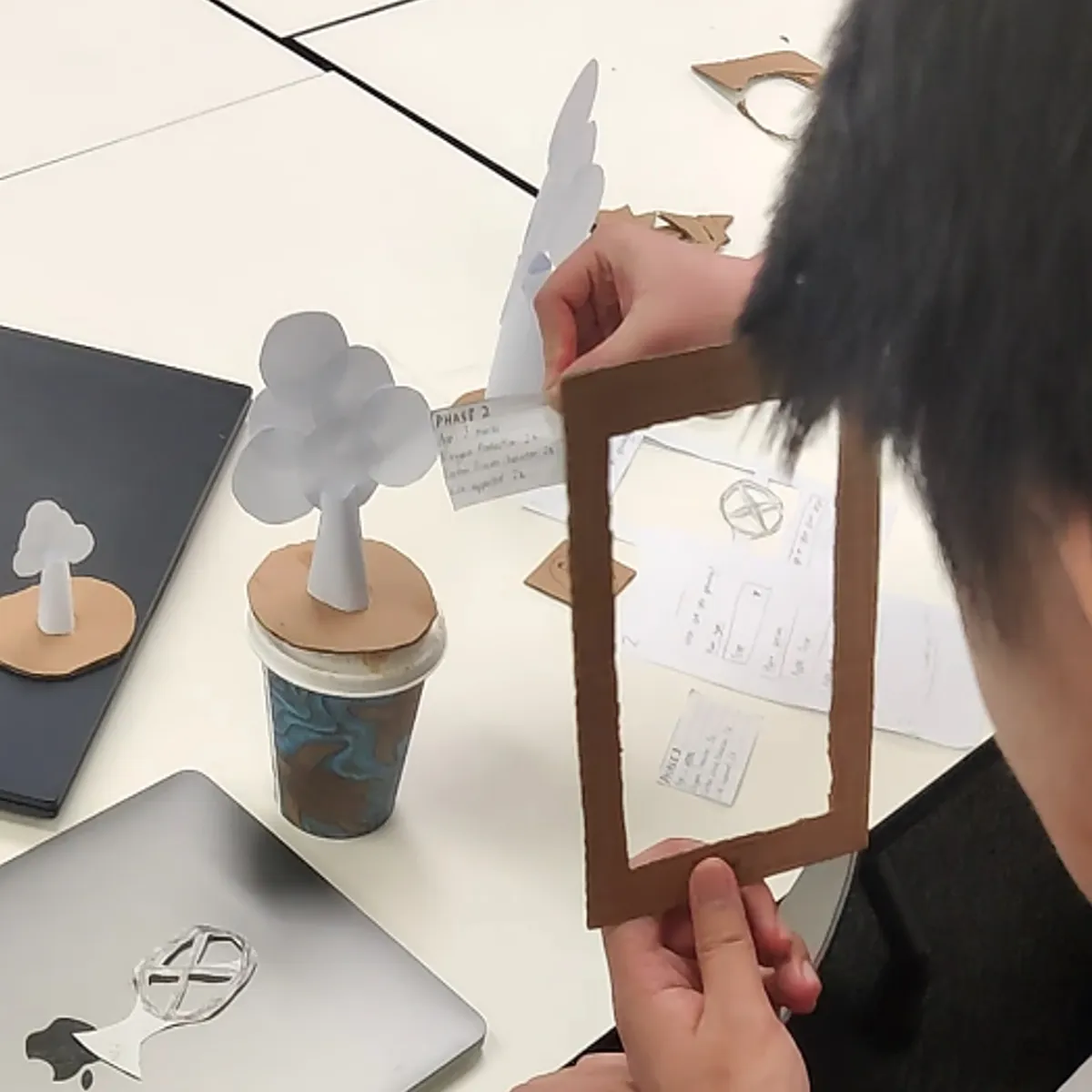
We began with low-fidelity prototyping, to quickly test the concept and enable easy refinements.
Paper Prototype
To test the concept, we created a paper prototype to simulate the experience of viewing a fully grown tree in augmented reality.
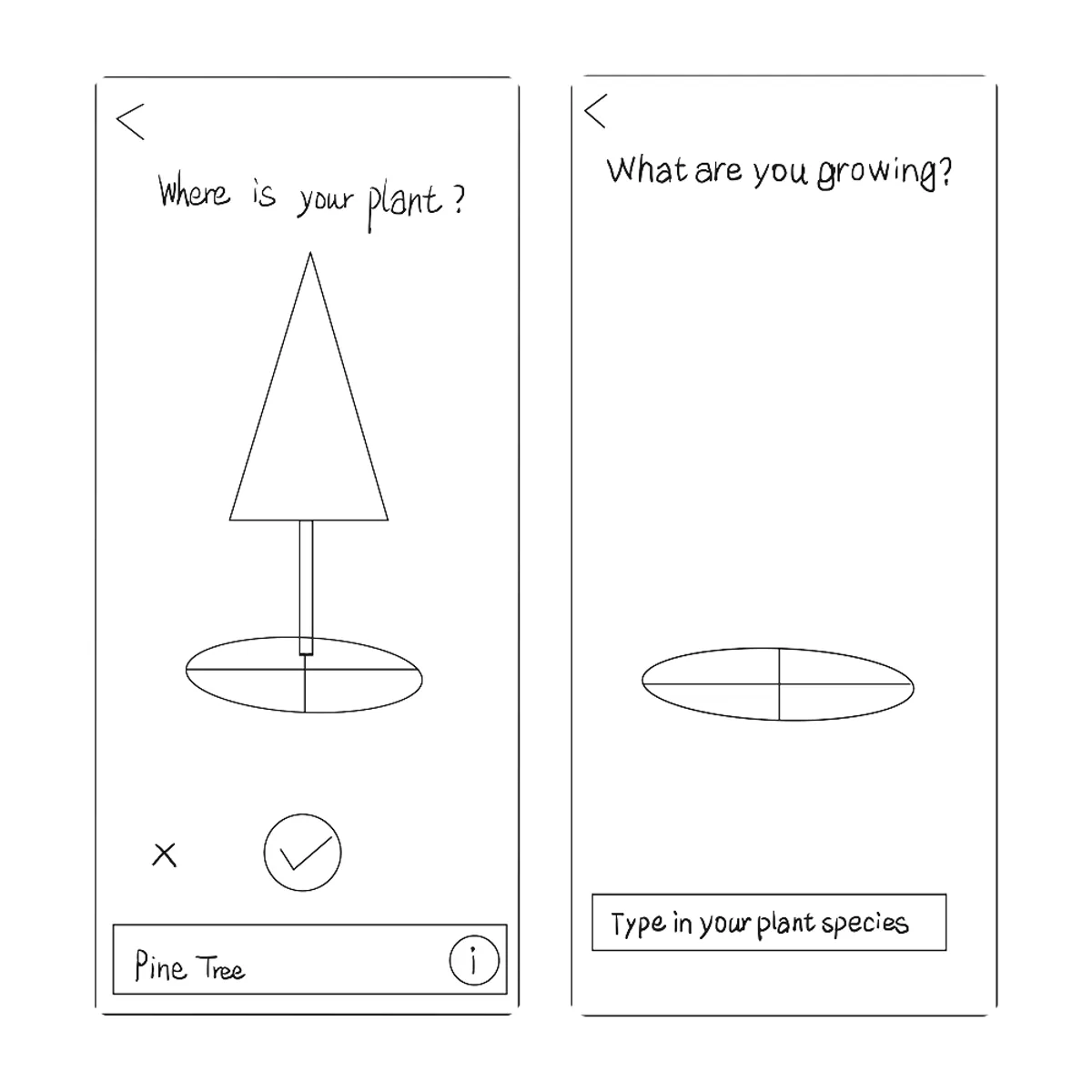
Sketches
We began by creating low-fidelity sketches to plan the core features and screen layouts of our app. This allowed us to map out how users would navigate through key functions, ensuring a smooth and intuitive user flow throughout the app.
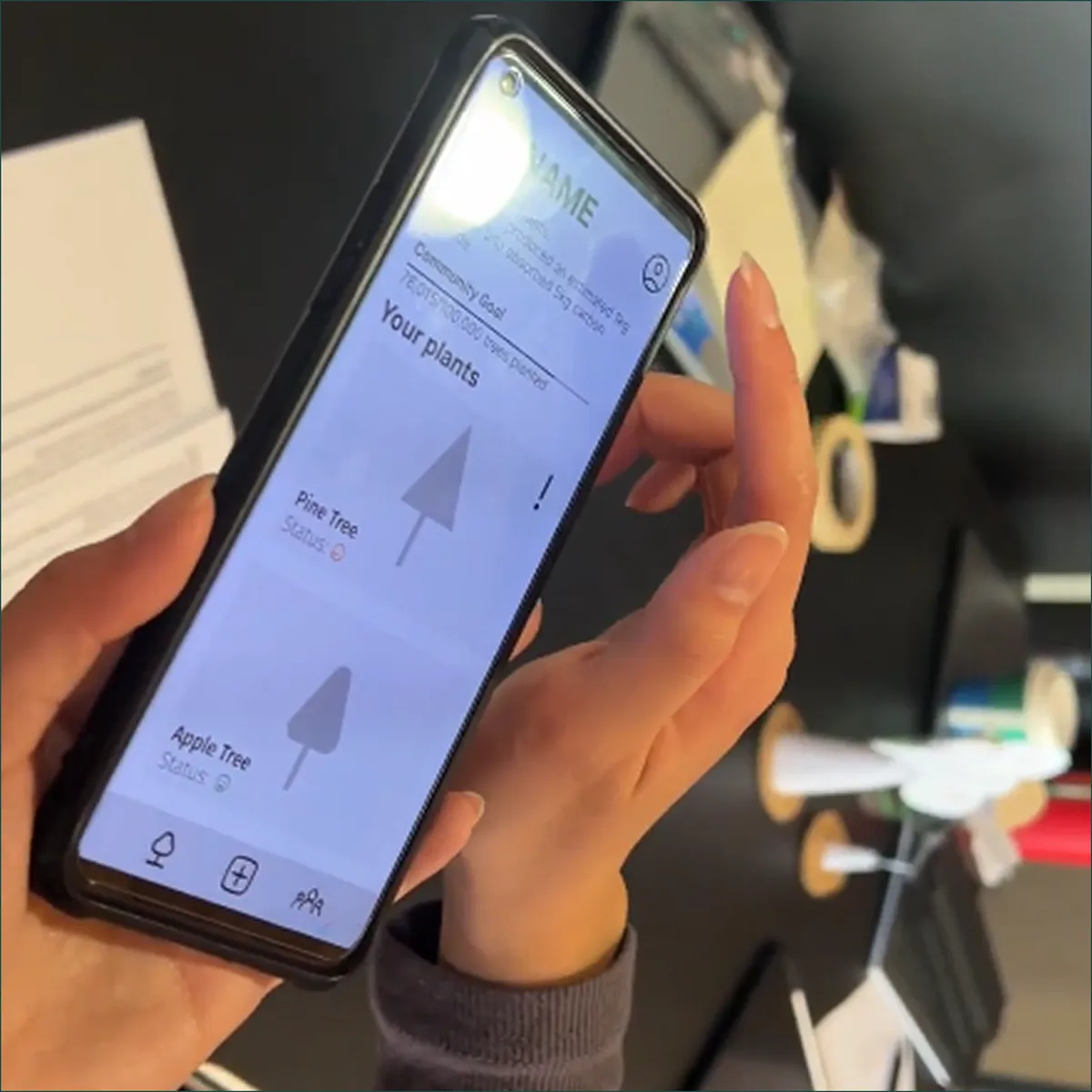
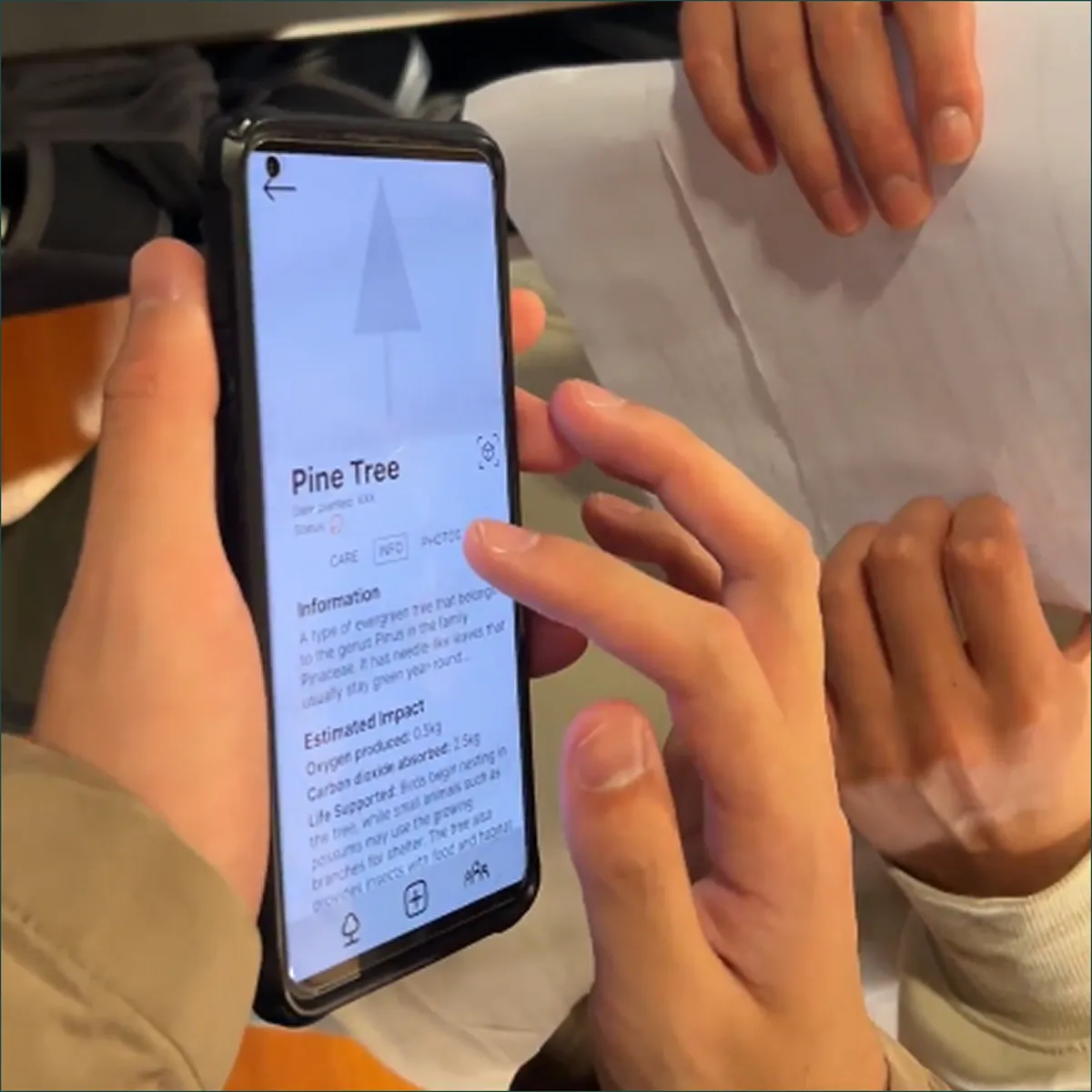
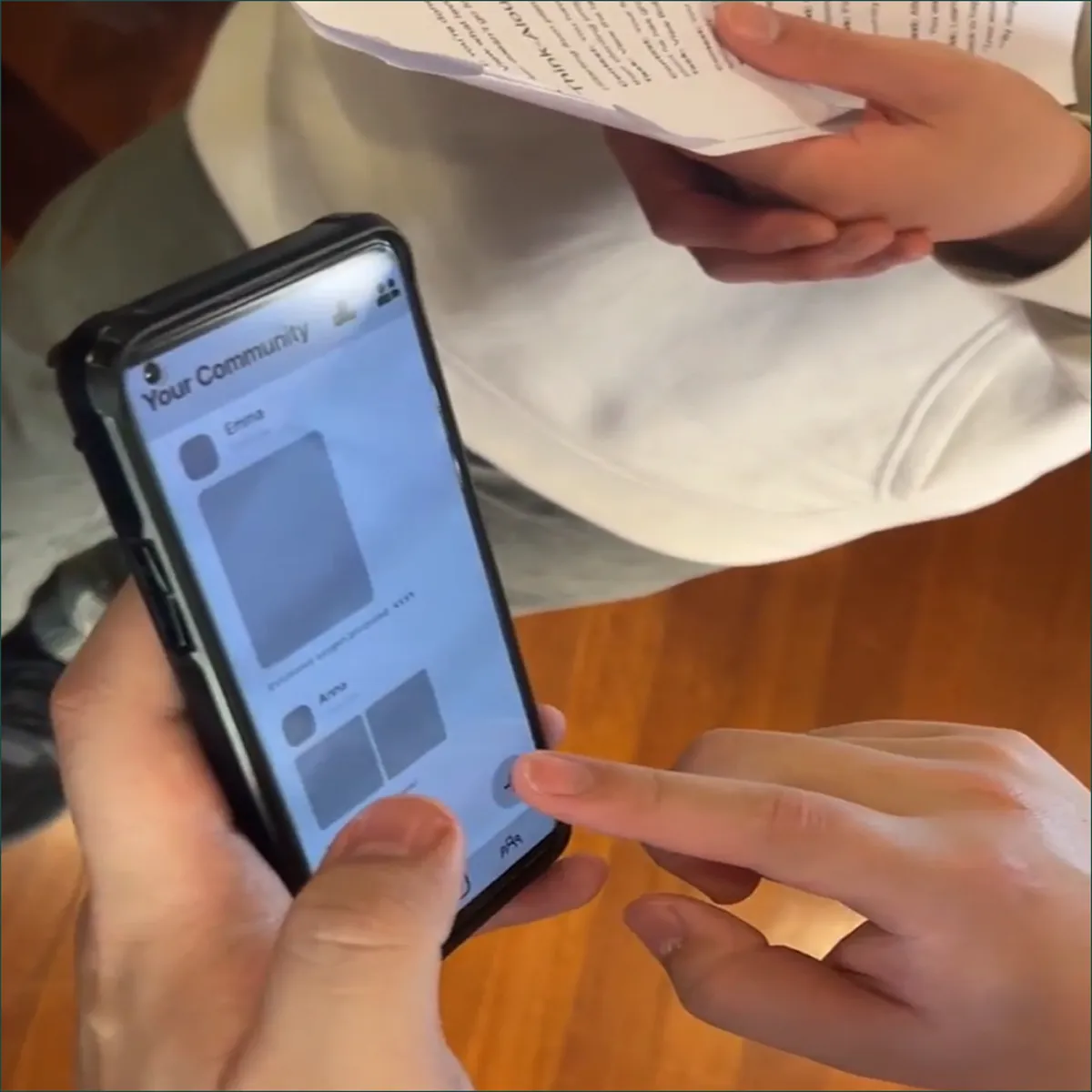
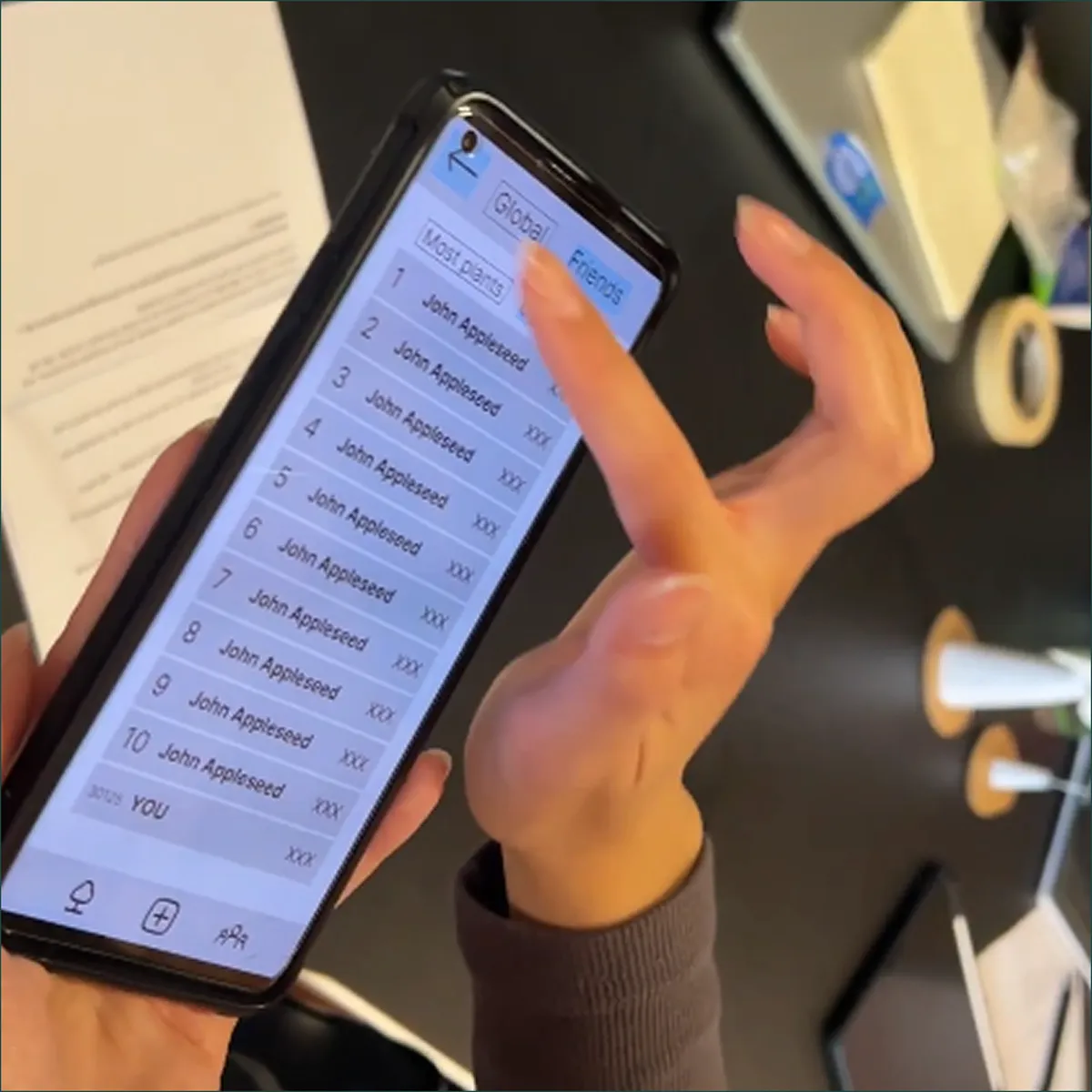
After receiving feedback on the functionality of our concept, I developed the mid-fidelity prototype. The aim was to have a more realistic design and basic interactivity, allowing us to test user interactions more effectively.
Wireframes
I created wireframes using Figma to provide a more detailed visualisation of the app’s design. This helped determine the UI elements and key interactions before moving to high-fidelity design.
Interactivity
The next step was to make the wireframes interactive, turning them into functional prototype for users to engage with. This involved creating additional screens for each possible interaction within our app, and connecting it all together.
User Testing Insights
Improving the product with user testing
Methods
- Think Aloud
- Observation
- Interviews
- Heuristic Evaluation
- A/B Testing
- SUS Form
AR Experience
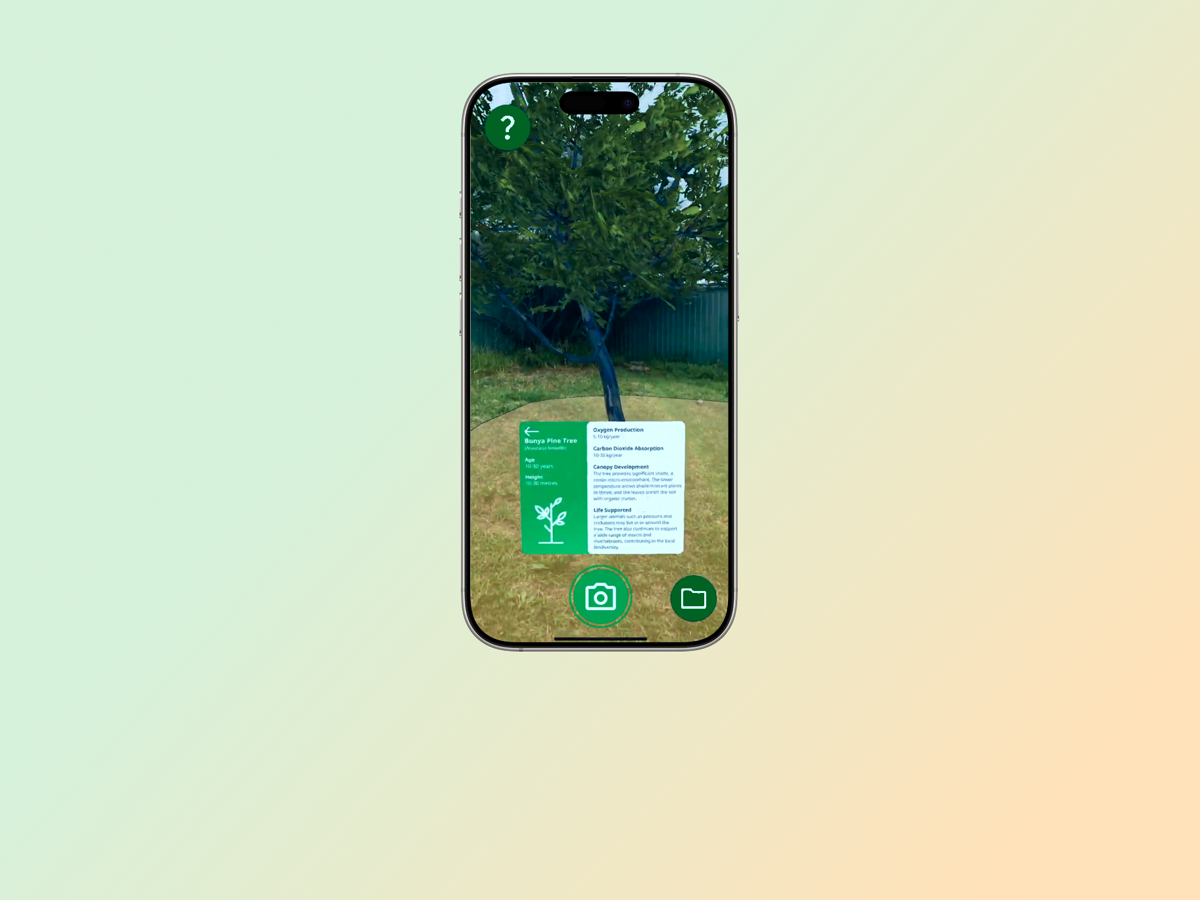
Users enjoyed the AR experience and the concept of visualising future tree growth. Many stated this would motivate them to plant and care for their trees. However, some users found the AR experience wasn't intuitive, as plant information was fixed and didn't rotate with them, requiring movement to a specific spot to read it.
Community Engagement
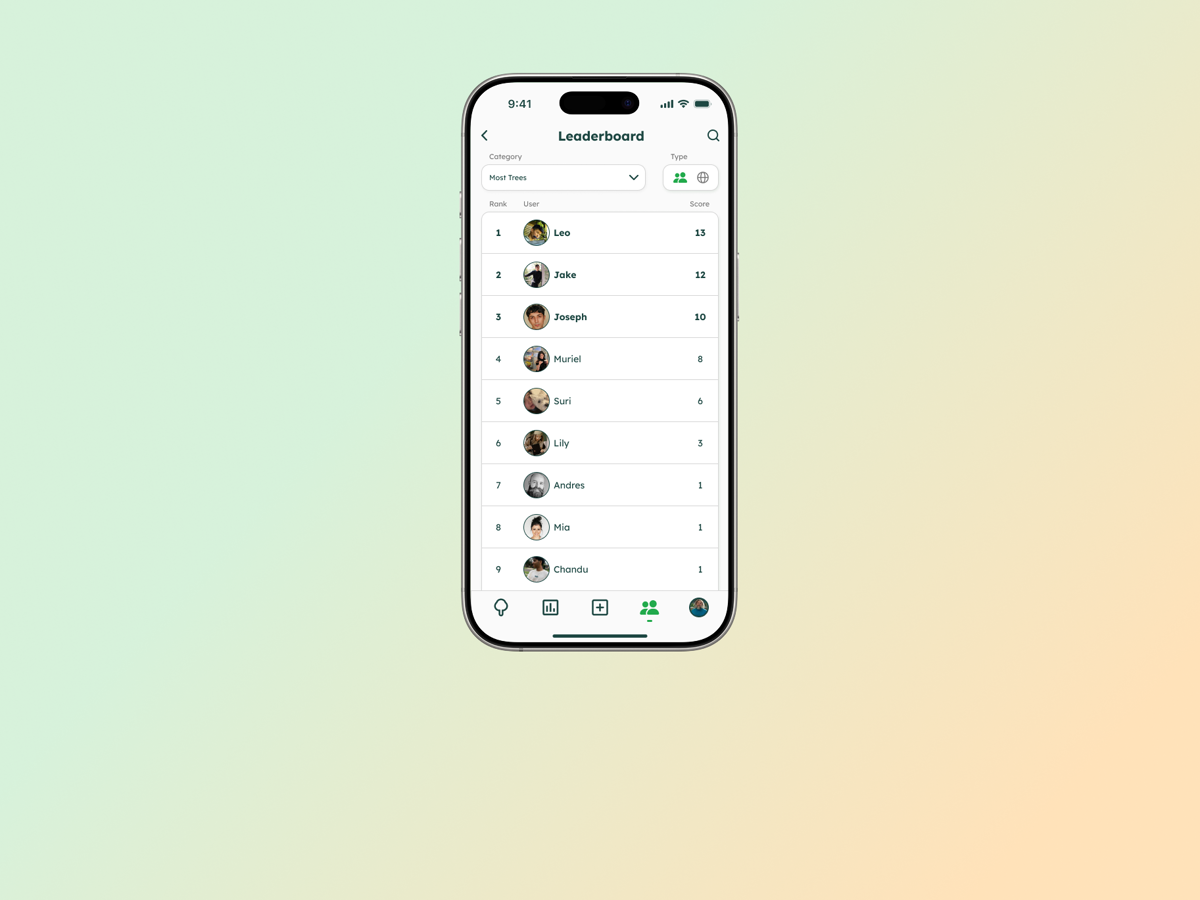
The leaderboard feature was well received, and users stated it would provide additional motivation as they try to beat their friends.
Select Plant Preference
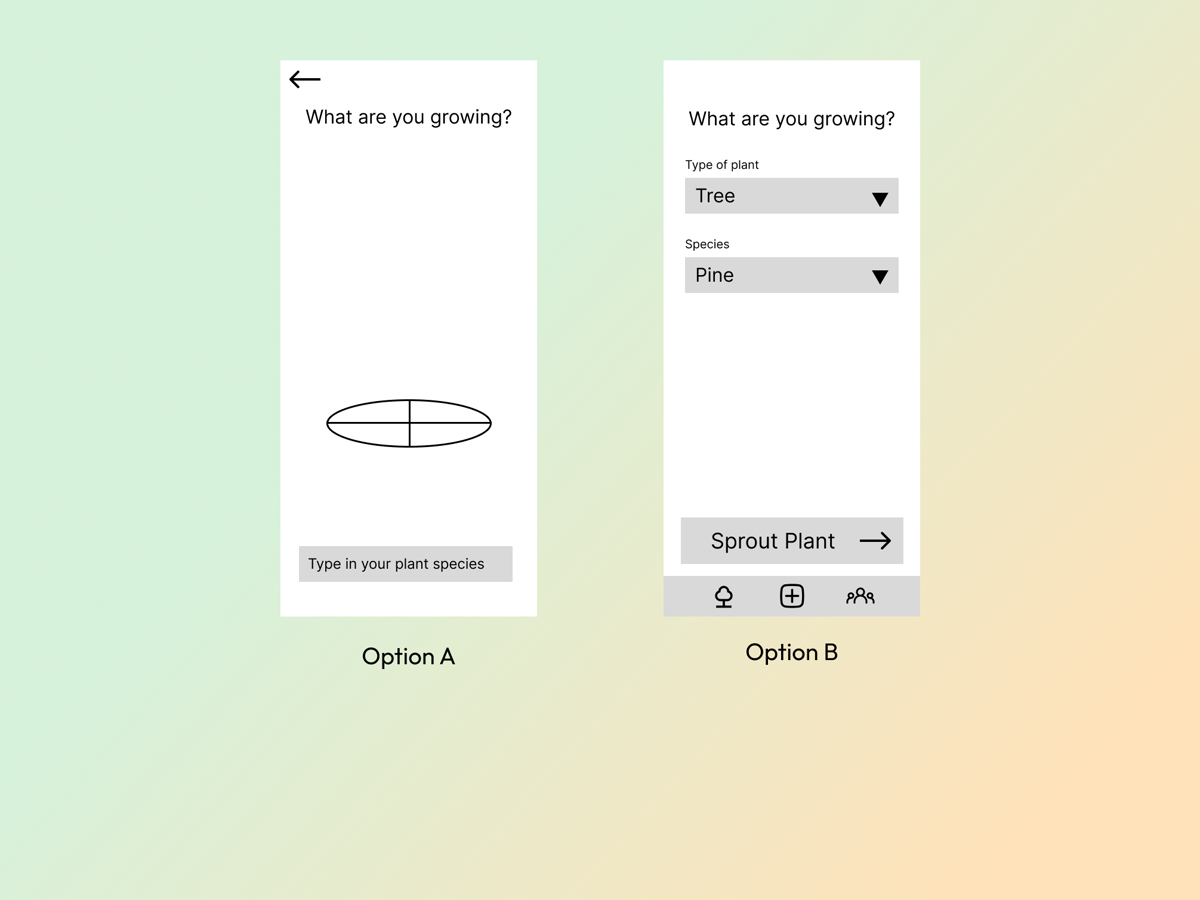
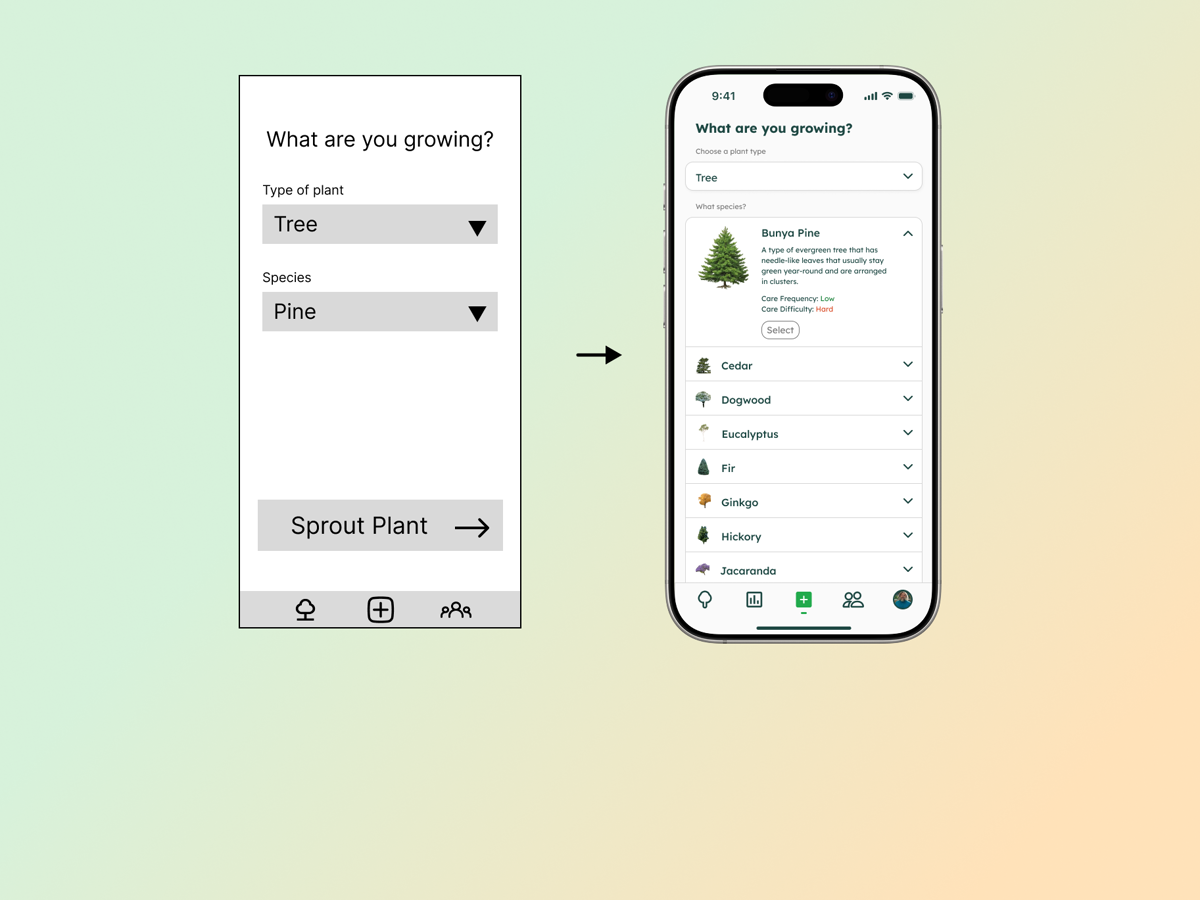
A/B testing revealed that users preferred the dropdown menu compared to the search bar when selecting a plant. It felt more intuitive as users could see all inputs that were available to them.
More Information Needed
Participants wanted to see more detailed information throughout the app, especially whilst choosing between different plant species. They wanted information such as the level of difficulty in growing each species, which ones are ideal for beginners, and which are low-maintenance options.
Design Consistency
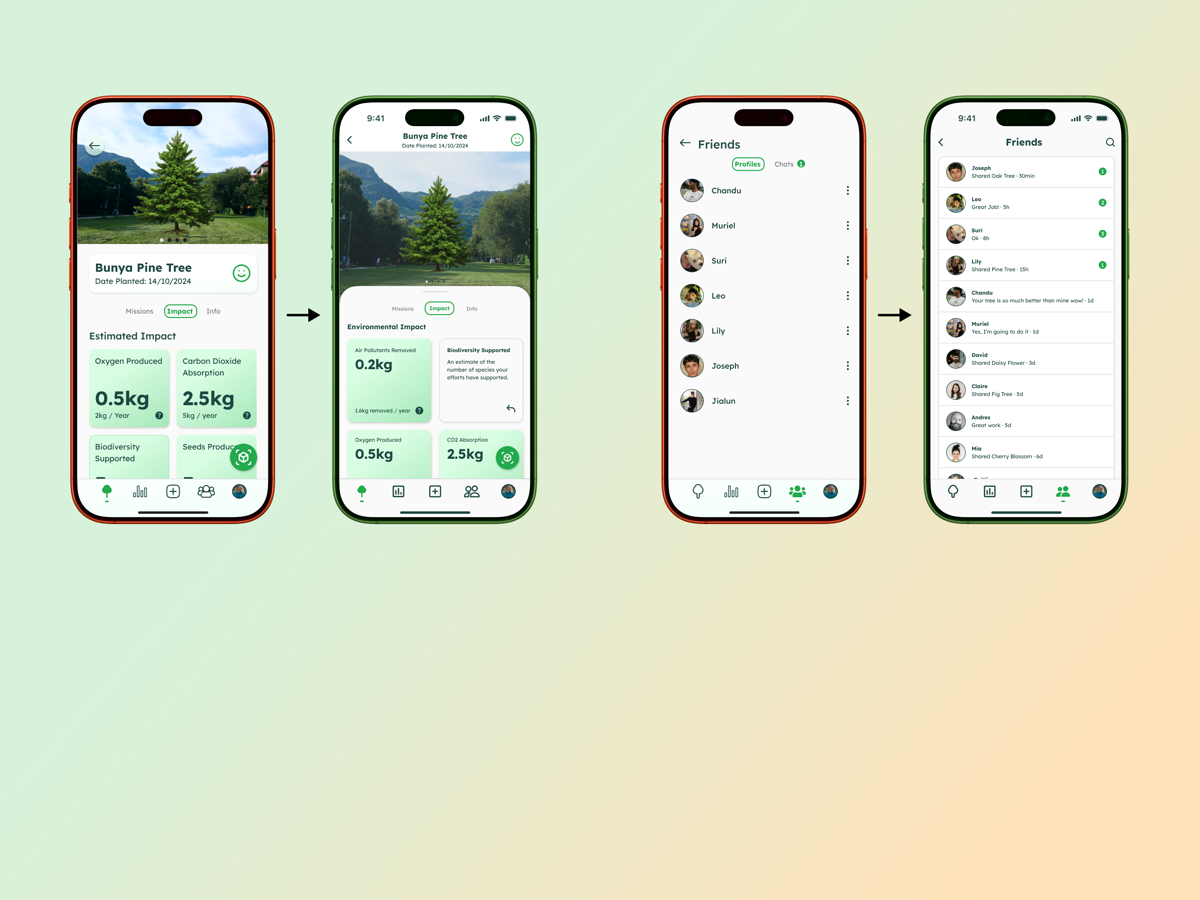
Some users struggled with navigation, due to deviations from typical app conventions, making it hard to access screens like the profile and environmental impact stats.
Design System
Creating style guidelines
Colours
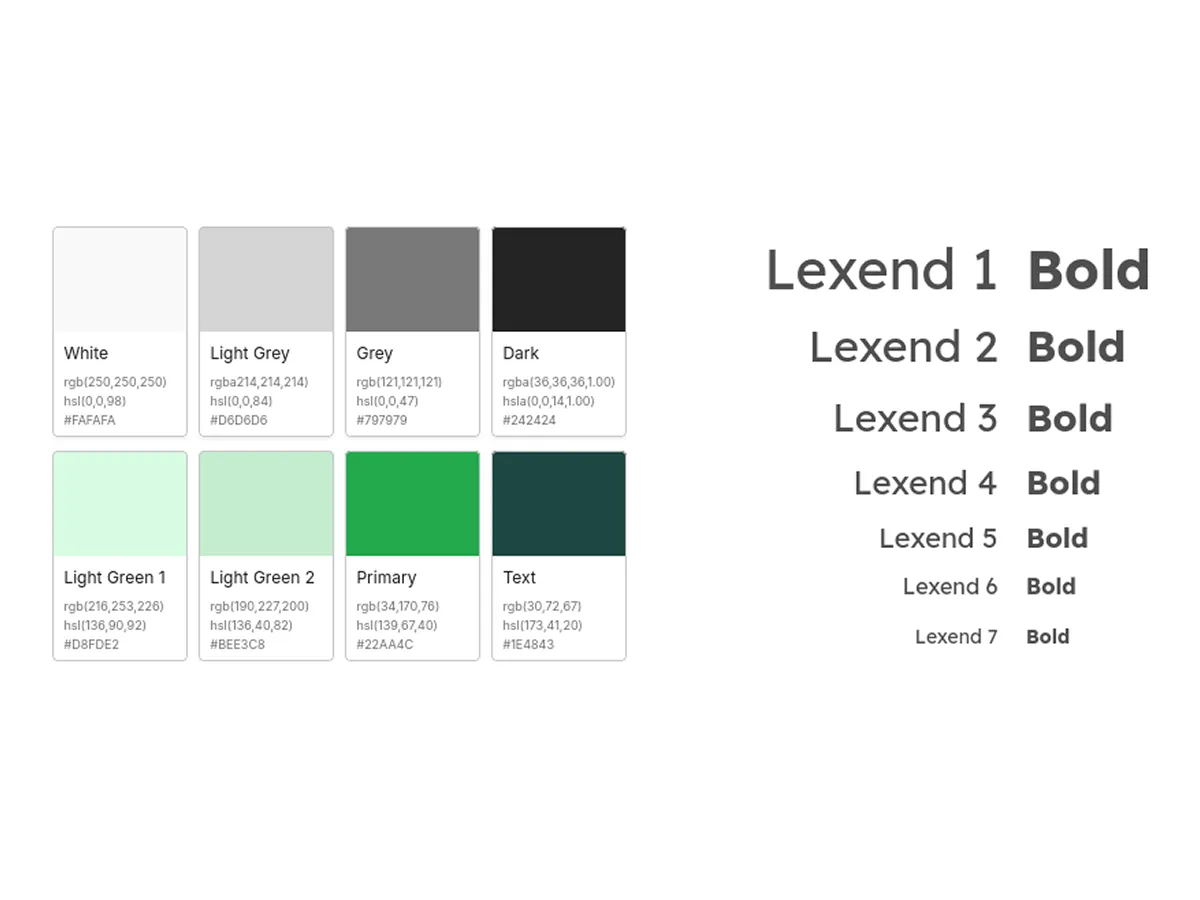
I used a green monochromatic colour scheme to symbolise growth and connect with nature. Green evokes inspiration, grounding users as they nurture their virtual tree.
Typography
I chose Lexend, a sans-serif font, to enhance the app’s modern aesthetic.
To ensure the best user experience on mobile devices, the minor third typographic scale was used, which is optimal for readability and visual hierarchy on mobile screens.
Iconography
The app uses icons that were designed with a clean line style to make the app appear more modern. This helps to complement the Sprout app’s forward-thinking design.
Reflection
What I learned from this project
What went well
- I successfully led a team to design a new app that encourages tree planting and raises awareness about the environment. I made sure everyone worked on tasks that matched their strengths, keeping the team productive and focused.
- A major area of growth for me was in developing my user testing skills. I focused on designing a testing protocol to test the app’s most important features. I then facilitated usability testing sessions with participants, gathering feedback and iterating the designs based on user insights.
- I also built a cohesive design system to keep the app visually clear and engaging. While doing this, I improved my Figma skills, learning new shortcuts and techniques which made designing faster and more consistent.
Future Steps
- Conduct more testing on the high-fidelity prototype to understand areas of weakness and refine the design further. More quantitative usability testing should be incorporated to give clearer insights into how users interact with the app and where it can be improved.
- The prototype should integrate the AR experience more smoothly into the app screens, to make it feel more like one seamless app experience.
- Expand the concept for AR/VR headsets, creating new ways for users to engage across different platforms.